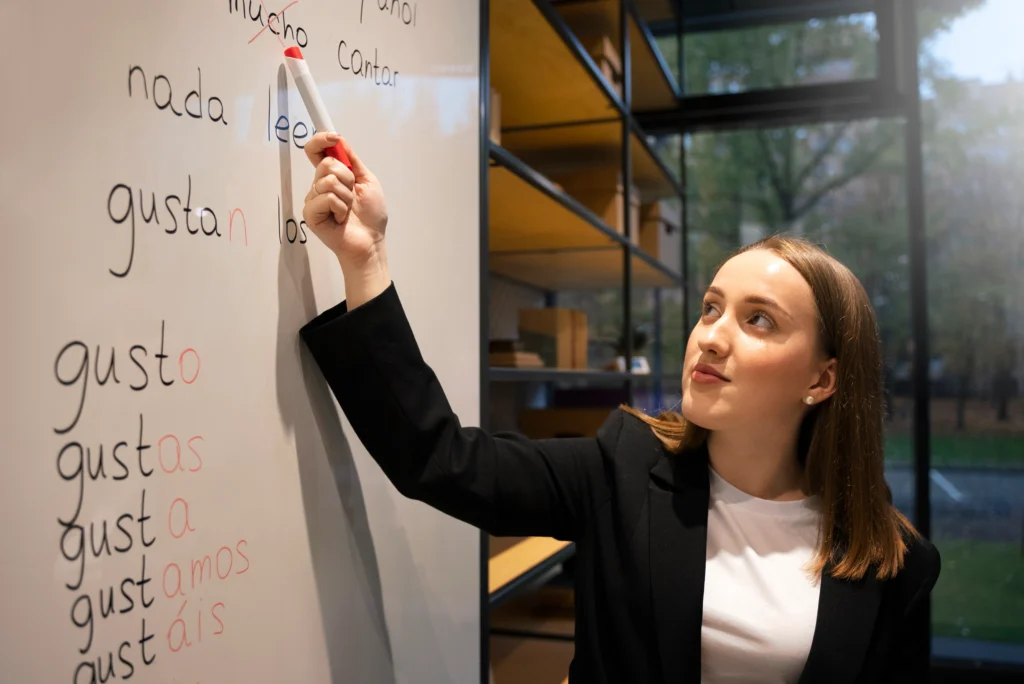
The “I Do, We Do, You Do” method is a structured teaching approach that provides students with clear guidance and support as they learn new concepts. This method is particularly effective in English classrooms, where students often need step-by-step support to master reading, writing, speaking, and listening skills. Here’s how each phase works and why it’s valuable in helping students build confidence and independence.
Step 1: I Do (Teacher Models)
In the “I Do” stage, the teacher introduces a new skill or concept by demonstrating it directly to the class. This phase is about showing, not just telling so that students have a clear example of what they’re expected to learn. For instance, if the lesson is about analyzing a character in a novel, the teacher might read a passage aloud and verbally break down the character’s traits, motivations, and actions. By doing this, the teacher provides a concrete example of the thinking process involved in character analysis.
This stage is essential because it allows students to see what success looks like and gives them a framework to follow. The teacher should make their thought process visible, using phrases like, “I’m thinking…” or “I’m noticing…” to help students understand how to approach the task. This builds a foundation for understanding before students try it themselves.
Step 2: We Do (Guided Practice)
The “We Do” phase involves the teacher and students working together. Here, the teacher guides students through the process while allowing them to contribute and make decisions along the way. For instance, if students are learning to write an essay introduction, the teacher might start by brainstorming ideas as a class, discussing each one, and then organizing thoughts into an introductory paragraph.
This step is critical because it provides students with hands-on practice in a supportive environment. The teacher can ask guiding questions, provide feedback, and clarify misunderstandings in real-time. This phase also helps students feel more confident about the material, as they can see that they are capable of performing the task with assistance. This shared responsibility in learning helps bridge the gap between teacher modeling and independent practice.
Step 3: You Do (Independent Practice)
In the “You Do” phase, students practice the skill or concept on their own, applying what they have learned. In an English class, this might mean writing their essay introduction, analyzing a text independently, or summarizing a passage. This step allows students to demonstrate their understanding and apply it to new contexts, which solidifies learning.
The teacher’s role in this phase is to observe, provide feedback, and support where needed, but ultimately allow students to take ownership of their work. This independence is crucial for building students’ confidence and helping them develop their unique voices in English. The teacher can assess individual progress here, identifying which students may need further guidance or a repeat of the earlier steps.
Why “I Do, We Do, You Do” Works
The “I Do, We Do, You Do” method is effective because it gradually releases responsibility to the student. It respects the natural learning process, acknowledging that students need guidance before they can confidently perform on their own. By modeling, practicing together, and then allowing for independence, students gain the confidence to tackle English assignments with clarity and skill.
Using “I Do, We Do, You Do” consistently in English teaching helps students engage actively, build essential language skills, and become independent learners. Whether they’re analyzing literature, writing essays, or practicing speaking, this approach supports a smooth transition from learning to mastery.