About The Books
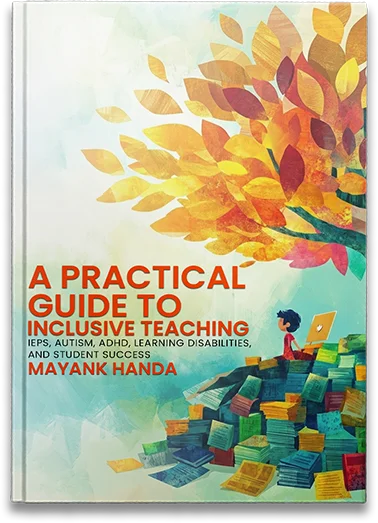
A Practical Guide To Inclusive Teaching
Walk into any classroom, and you will immediately spot that the concept of an “average student” is nothing but a myth. Every single child process information differently, and trying to teach everyone using the same rigid, traditional method simply fails most kids. Special Education: Unlock the Potential of Every Learner is a comprehensive, modern roadmap designed for educators, parents, and practitioners who refuse to settle for one-size-fits-all schooling.
This book shifts the narrative from “What is wrong with this student?” to “How does this student learn best?”—offering an empathetic yet deeply strategic approach to inclusive education.
Divided into clear, actionable parts, this book bridges the gap between historical foundations, legal frameworks like IDEA and 504 Plans, and real-world classroom execution. Readers will dive deep into diverse learning needs—including Autism Spectrum Disorder (ASD), ADHD, Dyslexia, Dyscalculia, and Emotional or Behavioral Disorders—while discovering evidence-based teaching strategies that work.
Inside, you will uncover the power of neurodiversity and strengths-based teaching to look past diagnostic labels, alongside practical methods for Universal Design for Learning (UDL) and differentiation to modify content without burning out.
Furthermore, the book provides essential toolkit strategies for trauma-informed care, de-escalation, and co-regulation to create psychologically safe classrooms.
It delivers a masterclass on the modern IEP process, data collection through CBM and frequency recording, and seamless multidisciplinary collaboration with families and school professionals.
Looking ahead, it also navigates life transitions after school and explores how to ethically leverage cutting-edge technology and Artificial Intelligence (AI) for personalized learning.
Whether you are a general education teacher looking to make your classroom truly inclusive, a special educator aiming to refine your data-driven instruction, or a parent advocating for your child’s rights, this book is your ultimate guide to transforming education from a culture of compliance into a culture of true belonging.
Our Publishing Platforms

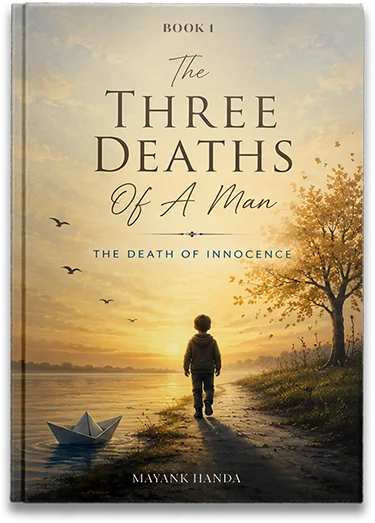
The Three Deaths Of a Man (Book 01)
The Three Deaths of a Man is a philosophical and literary poetry collection that explores the gradual transformation of a single unnamed man through three symbolic deaths: the death of innocence, the death of love, and the death of self. Rather than following a traditional plot, the book unfolds as an emotional and psychological journey through interconnected prose poems and meditations.
The central “character” is an unnamed man who represents both an individual and the universal human experience. His story is told through introspection rather than dialogue or external action. Throughout the trilogy, he confronts memory, identity, loss, loneliness, expectations, and ultimately transcendence.
The first section (The Death of Innocence) examines the gradual loss of childhood wonder as certainty gives way to complexity. Ordinary experiences become symbols of growing older, and the narrator reflects on how curiosity, trust, and hope slowly disappear without dramatic moments. Innocence dies quietly through everyday life rather than through a single traumatic event.
Our Publishing Platforms
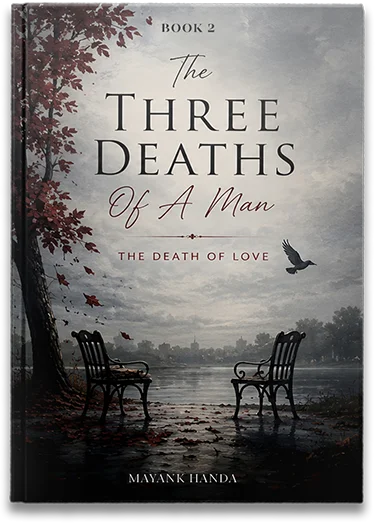
The Three Deaths Of a Man (Book 02)
The second section (The Death of Love) explores heartbreak not as a sudden ending but as a slow erosion of intimacy. The poems describe relationships fading through silence, routine, and emotional distance rather than conflict. The narrator mourns unfinished relationships, “almost” love, memories attached to ordinary places and objects, and the loneliness that remains after another person has become absence. Love is portrayed as something that can disappear gradually until two people no longer recognize the space between them.
Our Publishing Platforms
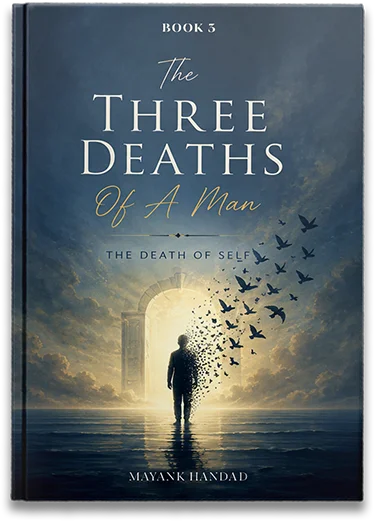
The Three Deaths Of a Man (Book 03)
The third section (The Death of Self) moves beyond relationships into questions of identity itself. The narrator begins to question whether personality, memories, habits, and social expectations truly define who he is. Mirrors, reflections, names, masks, and silence become recurring metaphors as he realizes that much of what he believed to be his identity was constructed from external expectations and repeated behaviors. As the book progresses, the “death” of self becomes less frightening and more liberating. By surrendering attachment to fixed identity, the narrator discovers a quieter, more authentic existence beyond labels and personal history.
Our Publishing Platforms
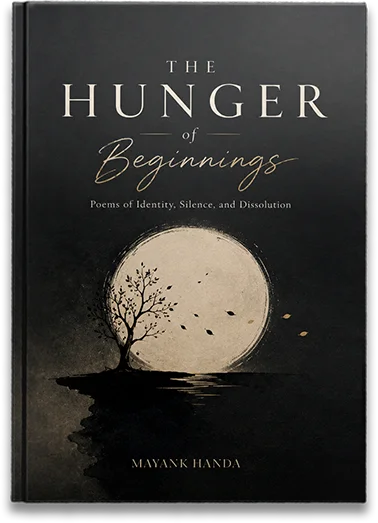
The Hunger of Beginnings
The manuscript, The Hunger of Beginnings: Poems of Identity, Silence, and Dissolution, starts with a voice that feels emotionally raw and searching. In the opening section, the speaker is driven by desire, loneliness, attraction, and confusion. They are reaching for people, meaning, and identity without really understanding themselves yet. There is a feeling of hunger—not literal hunger, but a deep emotional and psychological need. The speaker repeatedly discovers that things they believed were real (love, distance, certainty, identity) may actually be illusions or projections.
As the book continues, the speaker becomes more philosophical. Fate begins to feel like a force controlling life. Language itself becomes suspicious: words seem unable to fully communicate truth. Questions multiply faster than answers. Instead of finding certainty, the speaker discovers that every answer simply opens another question.
In the middle of the manuscript, time and identity become major subjects. The narrator begins wondering:
- Am I one person or many versions of myself?
- Am I living life or just observing it?
- Is the world genuine, or are we all acting inside some invisible performance?
The world starts feeling like a stage where everyone is performing roles. The speaker no longer trusts a stable sense of self. Identity becomes something fluid and unstable rather than something solid.
The emotional focus later shifts toward love and human relationships. But love here is not comforting or romantic in the usual sense. Love appears as something painful, uncertain, and changing. The speaker realizes people are partly real and partly creations of our own perceptions and memories. Betrayal is explored not simply as someone hurting another person, but as the changing nature of emotions themselves. Love transforms over time, and that transformation feels like betrayal.
Toward the final sections, reality itself starts becoming unstable. The poems move into symbolism and abstract ideas:
- Death stops being just an ending.
- Heaven and hell stop being physical places.
- Morality stops feeling absolute.
- Reality and imagination start blending together.
The speaker repeatedly realizes that many categories humans create—good and evil, truth and illusion, heaven and hell—might only exist because humans constructed them.
By the ending, the book reaches its final realization: there may never have been a final answer at all. The goal was never resolution. The journey itself mattered more than arriving anywhere. Even silence is not really empty; it exists beneath all speech. The final feeling is that thought creates reality and then begins questioning the reality it created.
Our Publishing Platforms